
Introduction
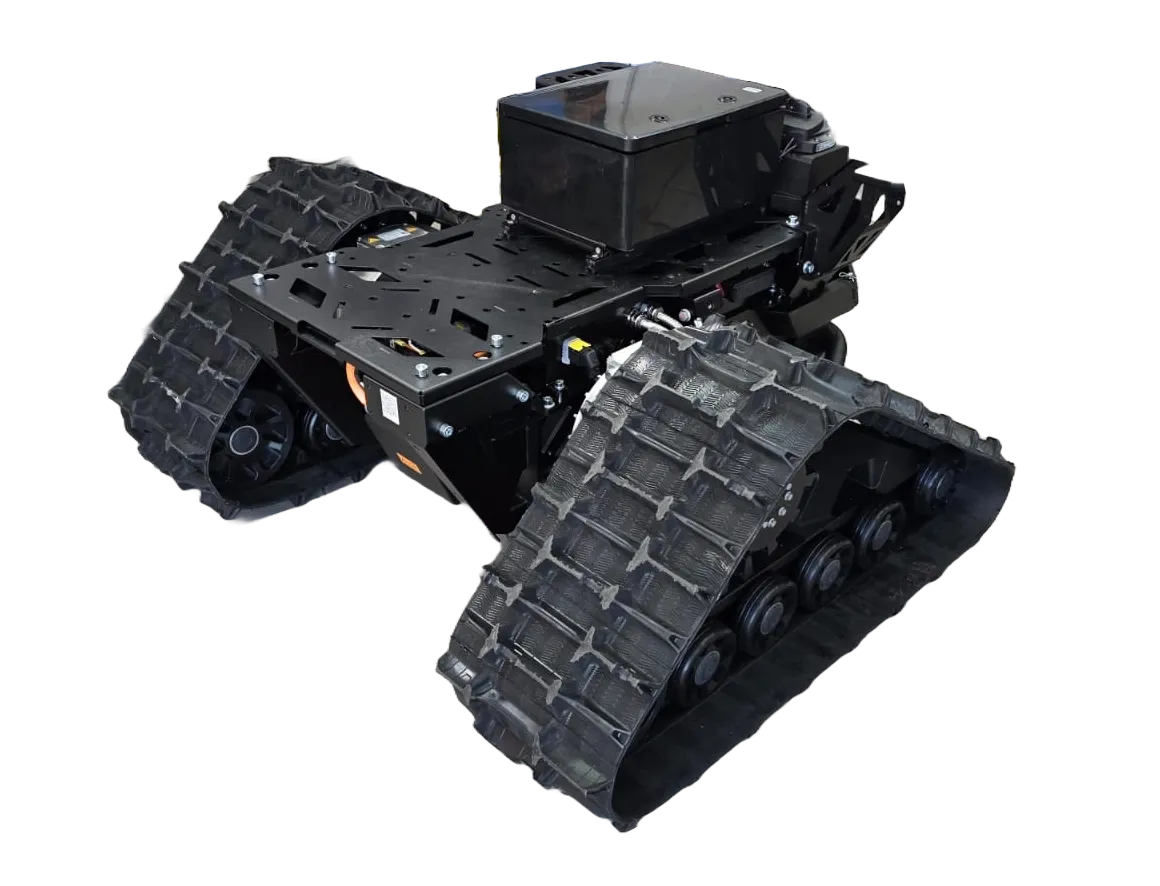
MYBOTSHOP ROVO3 Tracked Robot Platform
The MYBOTSHOP ROVO3 is a rugged tracked robot platform designed for autonomous mobile robot (AMR) applications. The tracked chassis provides superior terrain traversal capabilities compared to wheeled platforms, making it ideal for outdoor environments, rough terrain, and challenging surfaces.
Quick Links
Resource |
Link |
|---|---|
MYBOTSHOP Website |
|
ROVO3 ROS Documentation |
|
Robot Webserver |
|
ROS2 Jazzy Documentation |
|
Gazebo Harmonic Docs |
|
Nav2 Documentation |
External Dependencies
Package |
Documentation |
|---|---|
Ouster LiDAR Driver |
|
Intel RealSense ROS2 |
|
Teleop Twist Keyboard |
|
Nav2 Navigation |
|
ros_gz Bridge |
Current Available Features
Feature |
Status |
Notes |
|---|---|---|
ROVO3 Visualization (RViz2) |
Available |
|
ROVO3 Base High Level Driver |
Available |
Joint State, IMU, CMD, Odometry |
ROVO3 Description (URDF/Xacro) |
Available |
|
ROVO3 Lidar (Ouster) |
Available |
|
ROVO3 Depth Camera (Intel Realsense D435) |
Available |
|
ROVO3 Autostart Services |
Available |
|
ROVO3 Twist Multiplexer |
Available |
|
ROVO3 SLAM |
Available |
|
ROVO3 Odometry Navigation |
Available |
|
ROVO3 Map Navigation |
Available |
|
ROVO3 Webserver |
Available |
|
ROVO3 Gazebo Harmonic Simulation |
Available |
Manuals
Note
Product documentation and manuals are available for customers only. Please contact MYBOTSHOP for access to the following documents:
ROVO3 Flyer (DE/EN)
ROVO3 Assembly Manual
ROVO3 Product Documentation
ROVO3 CAN Control Guide
ROVO3 CAN Interface Documentation
ROVO Platform
The ROVO3 is based on the HAWE Mattro ROVO platform, a fully electric tracked drive system designed for off-highway autonomous applications.
Specifications
Mechanical
Parameter |
Value |
|---|---|
Chassis Type |
Tracked |
Drive System |
Dual Track Drive |
IP Rating |
Weather Resistant |
Electrical
Parameter |
Value |
|---|---|
Battery Type |
Lithium |
Communication Interface |
CAN Bus |
CAN Bitrate |
500 kbit/s |
Base Software
Parameter |
Value |
|---|---|
Operating System |
Ubuntu 24.04 LTS |
ROS Distribution |
ROS2 Jazzy |
Simulator |
Gazebo Harmonic |
Navigation Stack |
Nav2 |
Transport
Unpacking
When unpacking the ROVO3:
Carefully remove all packaging materials
Inspect the robot for any shipping damage
Verify all components against the packing list
Store packaging materials for future transport
Packing
For transport or storage:
Power off the robot and disconnect all cables
Secure any loose components
Use original packaging if available
Ensure adequate padding for protection